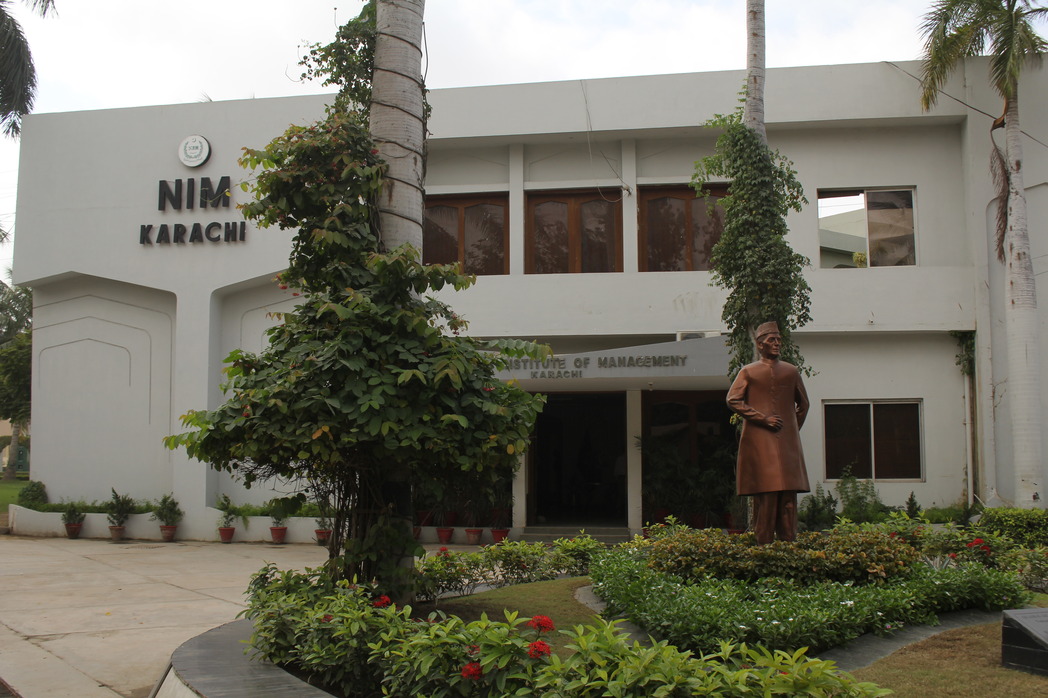
The National Institute of Public Administration (NIPA) Karachi is a constituent unit of the National School of Public Policy (NSPP) and plays a pivotal role in the training and capacity building of the civil servants of Pakistan. The National School of Public Policy (NSPP) in was established under the Ordinance No. XCIX of 2002. The purpose of establishing the NSPP was not only to improve the quality and effectiveness of existing public sector service providers but it was also to empower new entrants in the public sector with world class teaching, training and research facilities, and ultimately improve service delivery and policy outcomes.
Introduction About NIPA
Historical Background: The National Institute of Public Administration (NIPA) was established in 1961 as an autonomous government organization under the Establishment Division, and registered under the Societies Registration Act (No. XXI of 1861). Together with its sister institutions at Dacca and Lahore, it was initially set up for mandatory training of senior civil servants belonging to various occupational groups and autonomous bodies in the federal and provincial governments (at the senior level that later came to be known as BPS 19) who were in the eligibility zone for promotion. Over a period of time, other campuses of NIPA were established in Lahore, Peshawar and Quetta. NIPA Karachi has conducted 82 Advanced Courses for Public Sector Management (ACPSM).
The contents of ACPSM have been modified and the Course run was re-named as Senior Management Course (SMC). Up till 8th SMC, the course was run only at SMW of National Management College (NMC) Lahore. However, to facilitate the officers from Sindh, the government has decided to run this course at NIM Karachi. In this regard, from 9th SMC and onward the course will also being conducted both at SMWs of NMC Lahore and NIM Karachi, simultaneously.
For operational purposes NIM Karachi has been divided into two wings, namely; Mid-career Management Wing (MCMW) and Senior Management Wing (SMW).The MCMW conducts the Mid-Career Management Course for Grade-18 officers, and the SMW conducts the Senior Management Course for Grade-19 officers.
Mission
“NIPA aims to introduce excellence in public service through capacity building and the instillation of skills and values essential for accountable and effective good governance.”
The mission is based on the philosophy that the foundation of good governance lies in a transparent and effective government that is free from corruption, efficient, responsive, fair, and impartial. It upholds the principles of merit and equal treatment, without discrimination or excessive bureaucracy.
Vision
“Introducing excellence in public service delivery through capacity building and inculcation of skills and values essential for Good Governance”
Basic Aim
NIPA-Karachi, our primary aim is to enhance the capacity of public servants to perform their duties effectively. This can be achieved by fostering a sense of responsibility and a willingness to embrace change for the prosperity and betterment of society. This approach enables public servants to anticipate demands, influence development, and meet societal needs in the most innovative, practical, and productive ways. To this end, we have successfully trained a large number of mid-career and senior-level civil servants, equipping them to tackle the complex issues of public policy, decision-making, and effective service delivery.
Learning Philosophy and Vision of the Training Courses:
The core areas of our learning philosophy focus on good governance, human resource development, and leadership. Our participant-centred training and education, within a governance framework, aims to produce visionary leaders, who are efficient, responsive, proactive, and forward-thinking. These leaders inspire confidence, readily embrace change to enhance efficiency and cost-effectiveness, are committed to continuous learning, and adeptly employ modern management tools and techniques. Furthermore, they remain responsive to the needs of their constituents, particularly the common citizen.
Areas of Emphasis
In alignment with our philosophy and guiding principles, our primary focus is on developing participants’ analytical abilities, managerial excellence, and skills in negotiation and advocacy through the dissemination of knowledge, information, and expertise. Participants are expected to achieve competence in three key areas:
First: Civil servants must become skilled analysts: Given the critical importance of analysis in policy formulation, it is essential that civil servants develop strong analytical skills to improve the quality and effectiveness of public policy. To bridge the gap between policy formulation and implementation, the course is designed to cultivate analytical abilities in economic, financial, and socio-political assessments.
Second: Civil servants must be competent managers: Human organizations are complex, with limited and valuable resources. These scarce resources must be utilized wisely and strategically. Competent managers ensure the efficient use of all resources, both human and material.
Third: Civil servants must be effective advocates: To be effective and efficient, they must communicate purposefully, negotiate confidently, articulate a clear vision, develop a mission statement, define goals and objectives aligned with that mission, and build the necessary consensus for its successful implementation.
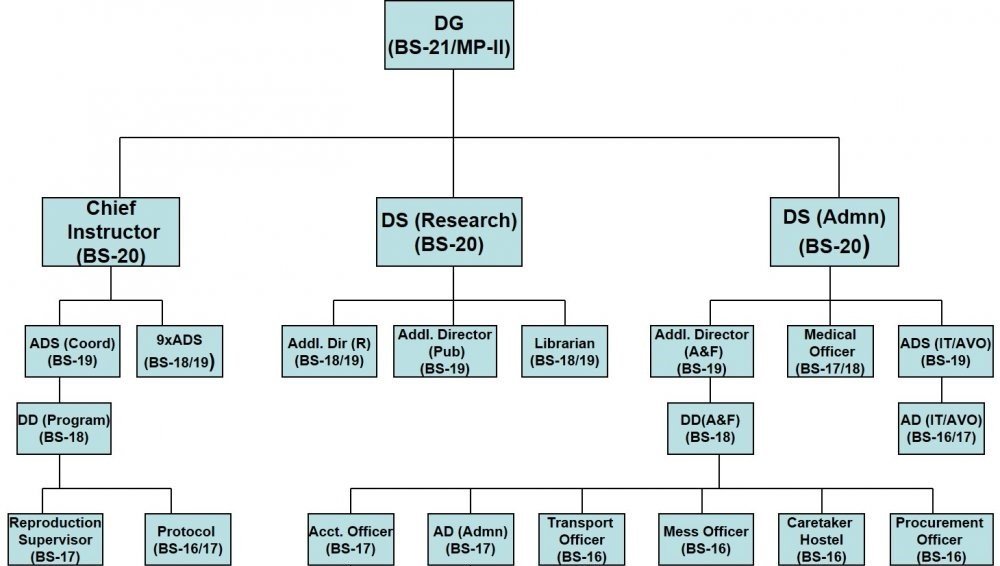
NIPA Organization Chart